Breitling / Watch journal
Breitling Story
The Navitimer’s slide rule began as a working interface. Its evolution helps explain Breitling’s instrument-led design without reducing the brand to one watch.

Milestones that explain the collection
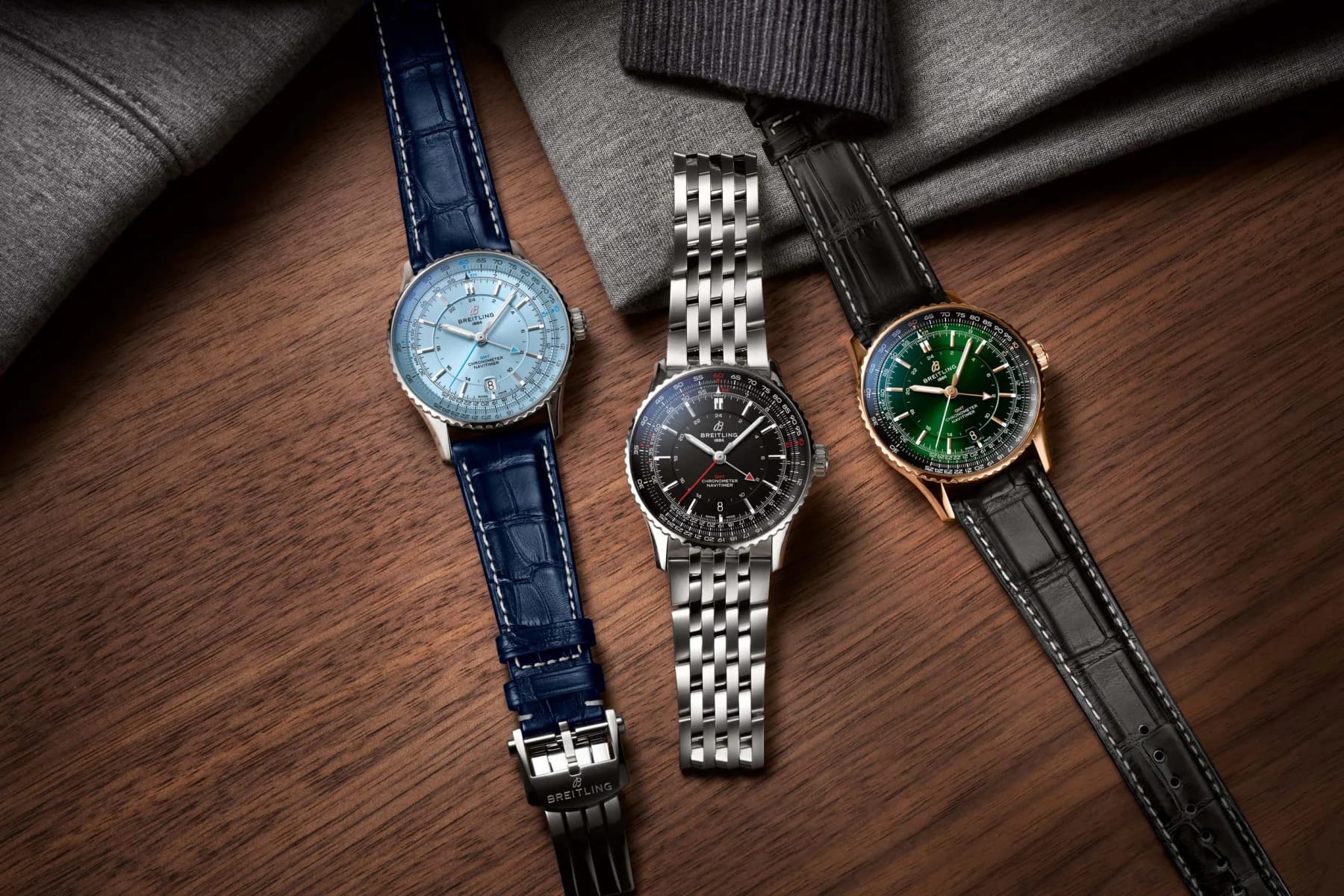
Breitling developed the Navitimer in 1952 following a request from the Aircraft Owners and Pilots Association. Its circular slide rule explains the information-rich dial. The present family also includes watches without a chronograph, so a familiar bezel does not identify the movement or functions by itself.
From calculation instrument to a wider family
The Navitimer’s circular slide rule explains a great deal about its visual identity. The scales were there to support calculations, not merely to make the dial look technical. That purpose helps a viewer understand why the outer display is unusually dense. Today, the familiar outline can appeal even to someone who will never use a slide rule. It remains worth learning which parts are scales, which are normal time indications and which belong to a chronograph on the reference being considered.
The modern Navitimer family extends beyond a single chronograph specification. That evolution is a reminder to separate a successful design name from the contents of the case. Chronomat and Superocean add other visual and functional directions, so Breitling cannot be reduced to an aviation dial alone. When comparing eras, use the reference to identify size, calibre and controls. Historical associations add context but do not establish a used watch’s performance, originality or suitability for water.
Read the history through the watch
A brand history is most useful when it helps explain the watch in front of you. Separate a collection’s first appearance from the production date of a particular reference. A familiar name can continue through major changes in construction, movement and proportions.
A modern heritage model may quote an older dial or case without reproducing its original mechanism or dimensions. That can be an advantage for everyday ownership. Conversely, a vintage watch may preserve period character while demanding more careful handling and specialist servicing. Neither is automatically the more authentic expression of your personal taste.
How this applies to Breitling
Choose Navitimer if its aviation instrument layout appeals, Chronomat if the bracelet and sportier case are central to your preference, and Superocean when comparing dive-oriented references. Check legibility in an ordinary wrist photograph. A beautifully detailed dial enlarged on a screen can feel quite different at normal viewing distance.
Put the information to work
Use the manufacturer’s chronology to establish context, then verify the actual reference, case and movement. Ask whether dial, hands and bracelet are period-correct, later manufacturer replacements or aftermarket parts. Provenance should describe the individual watch; an evocative story about the brand cannot substitute for it.
What to check on an individual watch
Confirm calibre, case size and service history; Breitling’s broad catalogue includes different movement types. On chronographs, ask for start, stop and reset demonstrations. Do not infer swimming suitability from a robust-looking case or an aviation reputation: use the exact reference’s instructions and a recent water-resistance assessment.
References and further reading
Manufacturer documentation and independent sources behind the details discussed above. Technical specifications apply to the named reference, not automatically to every watch in a collection.