Hublot / Watch journal
Hublot Story
Gold with rubber, then Big Bang’s layered construction: Hublot’s history is best understood through materials and the contrasts between them.
Milestones that explain the collection
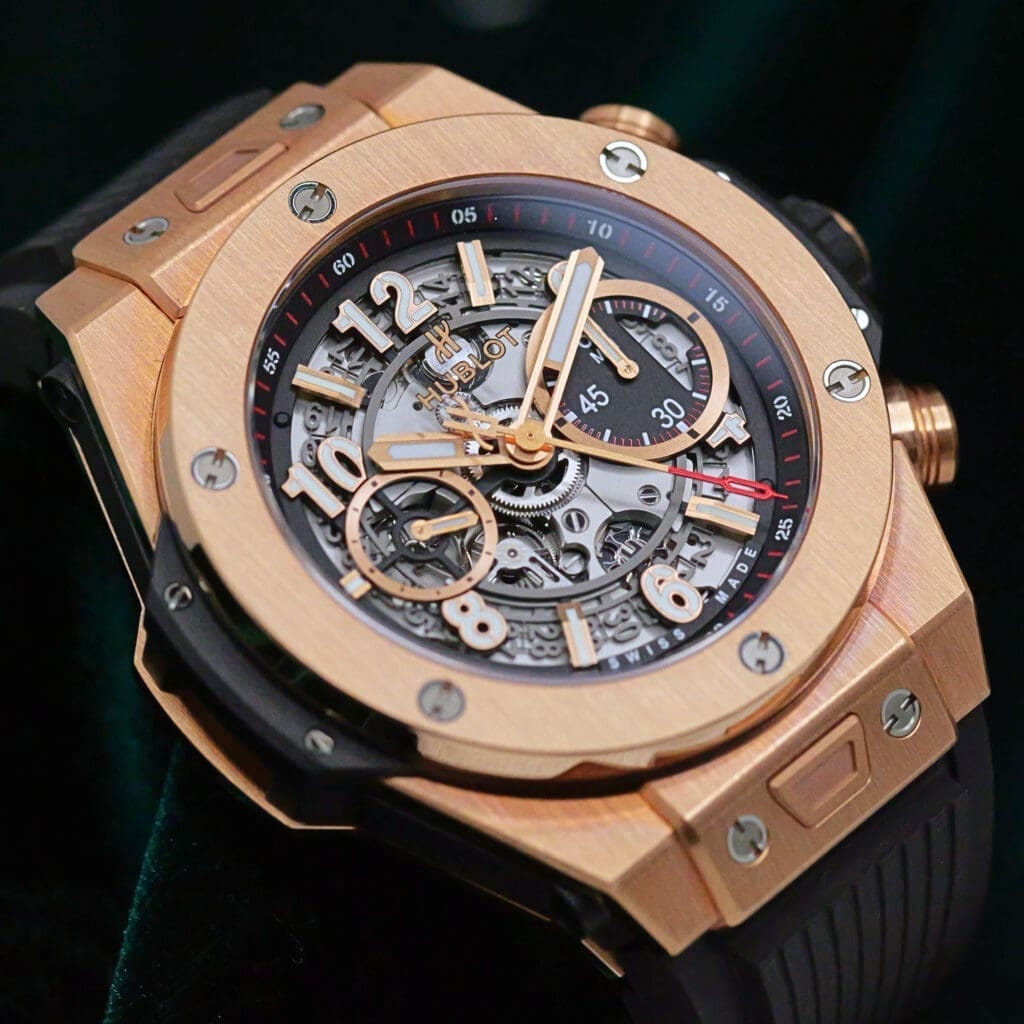
Hublot connects its fusion approach with its 1980 beginnings and the Big Bang launch in 2005. The useful distinction for shoppers is between a recognisable design language and the very different materials and movements sold within it. “Big Bang” alone is not a complete technical specification.
Sources: Hublot
Material contrast as the central idea
Hublot’s pairing of gold and rubber in 1980 explains the brand’s emphasis on contrast: precious metal did not have to be paired only with a traditional leather strap or matching bracelet. Big Bang, introduced in 2005, developed a more layered and visibly constructed expression of that approach. The important historical connection is the treatment of materials and their meeting points, not the assumption that every Hublot contains the same movement or serves the same type of wearer.
That distinction is useful when looking at a pre-owned Big Bang beside a later Unico version. A shared design language can conceal changes to case construction, controls and movement. Likewise, a darker case is not simply another colour of a metal example: establish whether it is ceramic, coated metal or another material. The story becomes informative when it helps you ask what the actual watch is made of, how it wears and how damage or ageing would be assessed.
Sources: Hublot

Read the history through the watch
A brand history is most useful when it helps explain the watch in front of you. Separate a collection’s first appearance from the production date of a particular reference. A familiar name can continue through major changes in construction, movement and proportions.
A modern heritage model may quote an older dial or case without reproducing its original mechanism or dimensions. That can be an advantage for everyday ownership. Conversely, a vintage watch may preserve period character while demanding more careful handling and specialist servicing. Neither is automatically the more authentic expression of your personal taste.
How this applies to Hublot
Classic Fusion offers a calmer starting point, while Big Bang places greater emphasis on layered construction and visible mechanical detail. Compare Unico, Spirit of Big Bang and Square Bang by shape, thickness and actual complication rather than treating them as colour variants. Try the full case-and-strap combination on a wrist similar to yours.
Put the information to work
Use the manufacturer’s chronology to establish context, then verify the actual reference, case and movement. Ask whether dial, hands and bracelet are period-correct, later manufacturer replacements or aftermarket parts. Provenance should describe the individual watch; an evocative story about the brand cannot substitute for it.
What to check on an individual watch
Request close-ups of ceramic or composite edges, exposed screws, strap attachment points and the clasp. Scratches, chips and strap ageing are different condition issues and should be described separately. Confirm the availability and cost of the correct replacement strap before buying a watch with a heavily worn one.
References and further reading
Manufacturer documentation and independent sources behind the details discussed above. Technical specifications apply to the named reference, not automatically to every watch in a collection.