Girard-Perregaux / Watch journal
Which Girard-Perregaux to Buy?
Integrated Laureato, round 1966, shaped Vintage 1945 or visible Bridges architecture: choose the experience before focusing on scarcity.
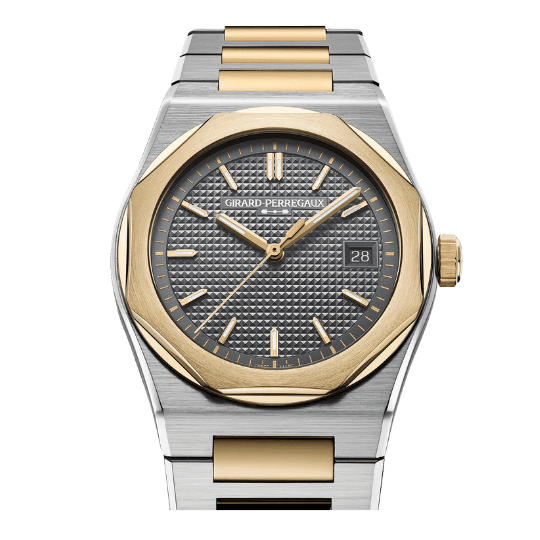
Choose for your wrist and routine
The right watch is the one whose size, functions and ownership demands suit you—not necessarily the model attracting the most attention. Start with three decisions: when you will wear it, which display you need and how much maintenance you are comfortable arranging.
Build a shortlist of three exact references, not three broad brand names. Compare diameter, thickness, length across the lugs, bracelet adjustment and readability. A date, second time zone or stopwatch should earn its place on the dial through actual use. More complications do not automatically make a better everyday watch.
How this applies to Girard-Perregaux
Laureato is the natural place to compare integrated-bracelet designs; 1966 offers rounder dress-watch choices, while Vintage 1945 uses a shaped case. Bridges focuses attention on movement architecture. “Vintage 1945” is a collection name, not evidence that a particular watch was manufactured in 1945.
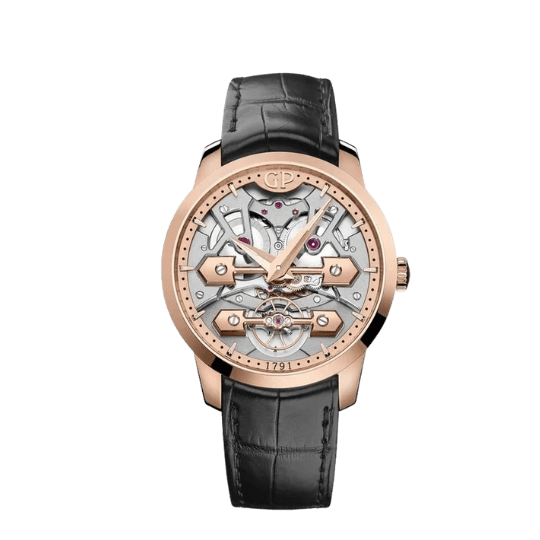
Build your Girard-Perregaux shortlist
For a bracelet-led everyday design, start with Laureato and assess how its first links fit your wrist. For a rounder dress watch, compare 1966; for a shaped case, look at Vintage 1945 without mistaking the name for the watch’s age. Bridges belongs on the shortlist when the movement architecture is itself the attraction. With any unusual complication, establish a realistic service route before making rarity the reason to buy. The best-documented example of the configuration you want is a stronger starting point than an unexplained scarce reference.
Compare the watches as you would wear them
Try to compare shortlisted watches under the same conditions: similar lighting, the same camera distance and a properly adjusted strap or bracelet. A tightly cropped dial photograph and a wrist photograph are not equivalent evidence of size. If an in-person comparison is not possible, request measurements and a side view. Write down one advantage and one compromise for each finalist. This prevents a striking colour or a persuasive listing from obscuring the fit or function that motivated your search.
Once the reference is settled, compare the actual examples available rather than restarting the search by brand reputation. Confirm the condition, accessories and work that is documented, and ask what remains unknown. You should be able to explain why this particular watch suits your wrist and routine without relying on resale predictions. A clear choice is usually one whose important trade-offs you understand, not one with no trade-offs at all.
Put the information to work
Before choosing, write down your total budget including inspection, any immediate service and missing accessories. Request a wrist photograph and a complete condition description for the finalist. If the available listing does not answer an important question, clarify it rather than filling the gap with the specifications of a similar-looking model.
What to check on an individual watch
Confirm the complete reference, bracelet length and movement condition before focusing on rarity. For unusual complications, obtain a specialist service assessment and clarify parts availability in writing. A scarce model can be fascinating to own while also taking longer to service or resell.
References and further reading
Manufacturer documentation and independent sources behind the details discussed above. Technical specifications apply to the named reference, not automatically to every watch in a collection.