Bvlgari / Watch journal
Bvlgari Story
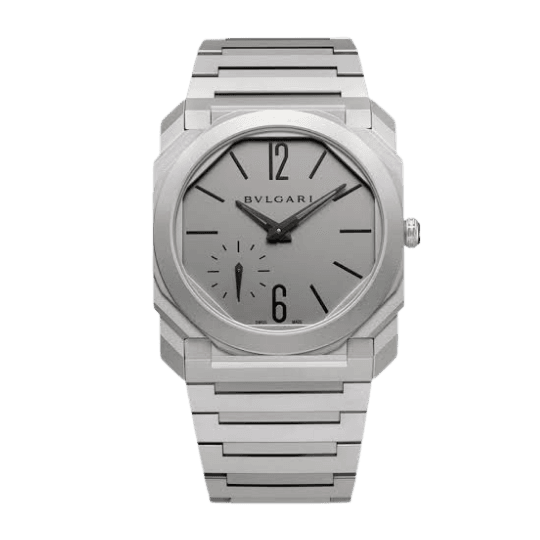
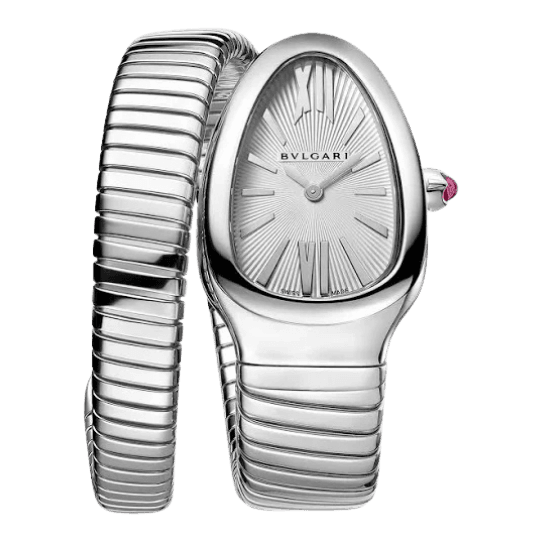
Serpenti leads the eye around the wrist; Octo focuses it on geometry. These contrasting ideas reveal the breadth of Bvlgari watch design.
Milestones that explain the collection
Bvlgari’s Serpenti watch story includes Tubogas designs dating to 1948. The Octo family takes a very different geometric direction. These two identities show why a jewellery watch and an ultra-thin mechanical watch should not be evaluated with the same priorities.
Serpenti and Octo: two ways to make the case matter
The Tubogas chapter of Bvlgari’s watch history reaches back to 1948 and makes the bracelet central to the composition. Serpenti is therefore best understood as a relationship between wrist, wrap and watch rather than a dial attached to a standard strap. The architecture invites a different kind of comparison: how the piece settles, how it opens and which parts of the design are visible while worn. Movement choice still matters, but it does not explain the whole object.
Octo Finissimo develops a contrasting interest in geometry and thin construction. Even within that family, the specifications of a rose-gold 102912 and steel 103431 differ, illustrating why an ultra-thin headline cannot describe every reference. Together, Serpenti and Octo show the breadth of Bvlgari’s watch design: one leads the eye around the wrist, the other through a strongly articulated case. A good buyer’s comparison respects those separate aims instead of judging both by a single conventional sports-watch checklist.
Sources: Bvlgari; Bvlgari; Bvlgari
Read the history through the watch
A brand history is most useful when it helps explain the watch in front of you. Separate a collection’s first appearance from the production date of a particular reference. A familiar name can continue through major changes in construction, movement and proportions.
A modern heritage model may quote an older dial or case without reproducing its original mechanism or dimensions. That can be an advantage for everyday ownership. Conversely, a vintage watch may preserve period character while demanding more careful handling and specialist servicing. Neither is automatically the more authentic expression of your personal taste.
How this applies to Bvlgari
For Serpenti, begin with the bracelet construction, number of wraps and wrist fit; for Octo Finissimo, begin with the specific calibre, metal and thickness. Octo Roma and Lvcea offer other shapes to compare. Do not assume all Serpenti watches are quartz or all Octo Finissimo references share identical dimensions.
Put the information to work
Use the manufacturer’s chronology to establish context, then verify the actual reference, case and movement. Ask whether dial, hands and bracelet are period-correct, later manufacturer replacements or aftermarket parts. Provenance should describe the individual watch; an evocative story about the brand cannot substitute for it.
What to check on an individual watch
On a jewellery-led watch, examine bracelet tension, clasp security and any stone-setting work. On an ultra-thin watch, ask about impact history and servicing rather than assuming a slim case is maintenance-free. Material, dial and bracelet must match the reference when comparing seemingly similar offers.
References and further reading
Manufacturer documentation and independent sources behind the details discussed above. Technical specifications apply to the named reference, not automatically to every watch in a collection.