Girard-Perregaux / Watch journal
Girard-Perregaux Story
Three Bridges, Laureato and Vintage 1945 explore different structures. Read their names as design ideas before drawing conclusions about age or rarity.
Milestones that explain the collection
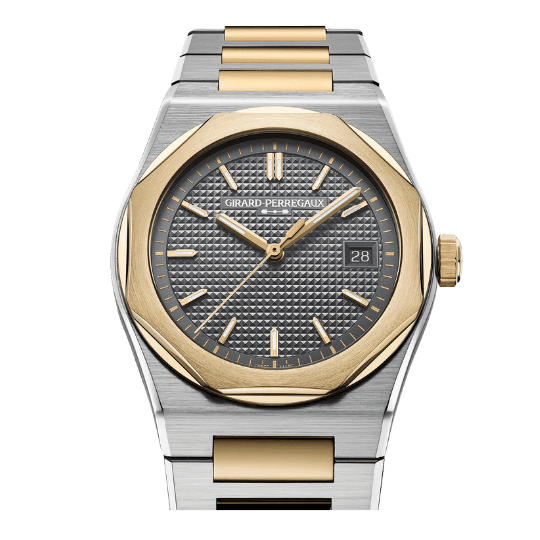
Girard-Perregaux traces its manufacture heritage to 1791 and associates its Three Bridges architecture with nineteenth-century watchmaking. Laureato arrived in 1975. A modern Bridges watch and a Laureato therefore express different parts of the brand’s history rather than one being a variation of the other.
Sources: Girard-Perregaux; Girard-Perregaux
Visible architecture and integrated design
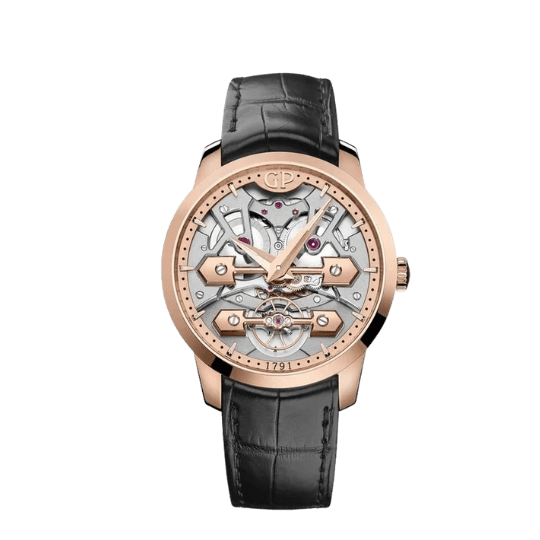
Girard-Perregaux’s Three Bridges and Laureato point towards different kinds of visual structure. Bridges draws attention to the organisation of the mechanism; Laureato, introduced in 1975, brings case, bezel and bracelet into one integrated composition. A buyer interested in one may not be looking for the other at all. The brand’s history is consequently more useful as a set of design and mechanical ideas than as a single style applied across every watch.
The Vintage 1945 name creates another distinction worth preserving: it is a design-family name, not automatically a production date. The Jackpot Tourbillon reference 99720, introduced in 2007, makes that especially clear. Its miniature mechanical display is very different from the everyday requirements of a simpler rectangular watch. When browsing older Girard-Perregaux listings, identify the reference and actual mechanism before interpreting a collection name as evidence of age, rarity or intended use.
Sources: Girard-Perregaux; Girard-Perregaux; Christie’s
Read the history through the watch
A brand history is most useful when it helps explain the watch in front of you. Separate a collection’s first appearance from the production date of a particular reference. A familiar name can continue through major changes in construction, movement and proportions.
A modern heritage model may quote an older dial or case without reproducing its original mechanism or dimensions. That can be an advantage for everyday ownership. Conversely, a vintage watch may preserve period character while demanding more careful handling and specialist servicing. Neither is automatically the more authentic expression of your personal taste.
How this applies to Girard-Perregaux
Laureato is the natural place to compare integrated-bracelet designs; 1966 offers rounder dress-watch choices, while Vintage 1945 uses a shaped case. Bridges focuses attention on movement architecture. “Vintage 1945” is a collection name, not evidence that a particular watch was manufactured in 1945.
Put the information to work
Use the manufacturer’s chronology to establish context, then verify the actual reference, case and movement. Ask whether dial, hands and bracelet are period-correct, later manufacturer replacements or aftermarket parts. Provenance should describe the individual watch; an evocative story about the brand cannot substitute for it.
What to check on an individual watch
Confirm the complete reference, bracelet length and movement condition before focusing on rarity. For unusual complications, obtain a specialist service assessment and clarify parts availability in writing. A scarce model can be fascinating to own while also taking longer to service or resell.
References and further reading
Manufacturer documentation and independent sources behind the details discussed above. Technical specifications apply to the named reference, not automatically to every watch in a collection.