IWC Schaffhausen / Watch journal
IWC Schaffhausen Story
From Jones’s industrial ambition in Schaffhausen to the Ingenieur’s changing architecture, IWC’s history is not a single unchanging design.
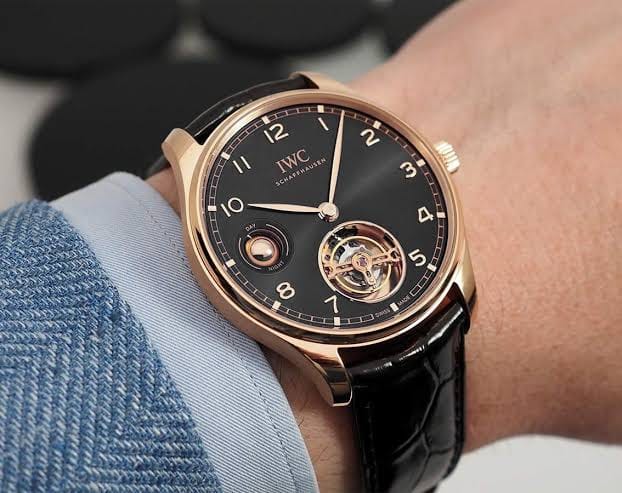
Milestones that explain the collection
IWC was founded in Schaffhausen in 1868 by Florentine Ariosto Jones. Pilot’s watches, Portugieser and Ingenieur developed different visual identities within the same manufacture. The Ingenieur began in 1955; Genta’s integrated-bracelet Ingenieur SL followed in 1976, not at the family’s beginning.
Sources: IWC Schaffhausen; IWC Schaffhausen; IWC Schaffhausen
Schaffhausen, industrial ambition and distinct design families
Florentine Ariosto Jones founded IWC in Schaffhausen with an industrial ambition: combine Swiss watchmaking skills with modern production and the power available from the Rhine. This gives the 1868 foundation a more specific meaning than simply an old date on a dial. The later wristwatch families did not all express that ambition through the same shape. Pilot’s Watches, Portugieser and Ingenieur each give the wearer a different relationship with the display and case.
The Ingenieur illustrates how one family can contain several historical chapters. Its 1955 beginning predates the integrated-bracelet Ingenieur SL designed by Genta and introduced in 1976. The reference 1832 identifies that later design chapter; it should not be used as a description of every earlier or later Ingenieur. This distinction matters to collectors and everyday buyers alike, because historical continuity does not guarantee continuity of case size, bracelet construction or movement.
Sources: IWC Schaffhausen; IWC Schaffhausen
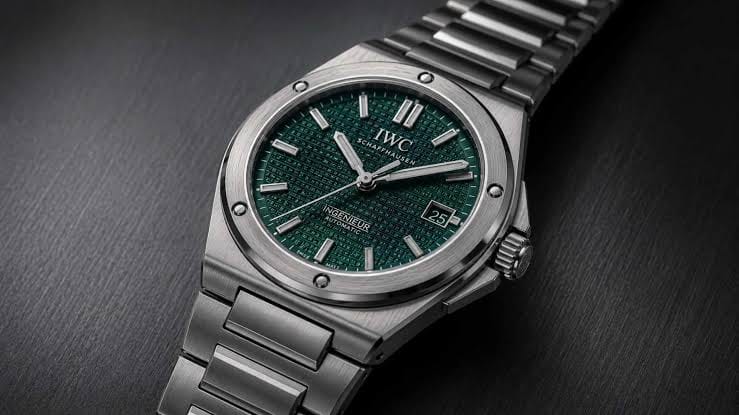
Read the history through the watch
A brand history is most useful when it helps explain the watch in front of you. Separate a collection’s first appearance from the production date of a particular reference. A familiar name can continue through major changes in construction, movement and proportions.
A modern heritage model may quote an older dial or case without reproducing its original mechanism or dimensions. That can be an advantage for everyday ownership. Conversely, a vintage watch may preserve period character while demanding more careful handling and specialist servicing. Neither is automatically the more authentic expression of your personal taste.
How this applies to IWC Schaffhausen
Pilot’s Watches favour an instrument-like display, Portugieser offers a different dress-and-chronograph vocabulary, and Ingenieur places the bracelet-and-case relationship at the centre of many references. Consider case length and thickness alongside diameter. Two watches sharing a nominal size may fit very differently under a sleeve.
Put the information to work
Use the manufacturer’s chronology to establish context, then verify the actual reference, case and movement. Ask whether dial, hands and bracelet are period-correct, later manufacturer replacements or aftermarket parts. Provenance should describe the individual watch; an evocative story about the brand cannot substitute for it.
What to check on an individual watch
Use the IW reference to establish the exact calibre and functions. Not every automatic IWC uses the same winding system. Ask about date operation, power-reserve behaviour where indicated and a documented service assessment; a movement running when photographed does not establish its full condition.
References and further reading
Manufacturer documentation and independent sources behind the details discussed above. Technical specifications apply to the named reference, not automatically to every watch in a collection.