Omega / Watch journal
Omega Speedmaster or Seamaster?
A Moonwatch, Diver 300M and Aqua Terra answer different needs. Compare the displays, winding routine and wrist fit before choosing a family name.
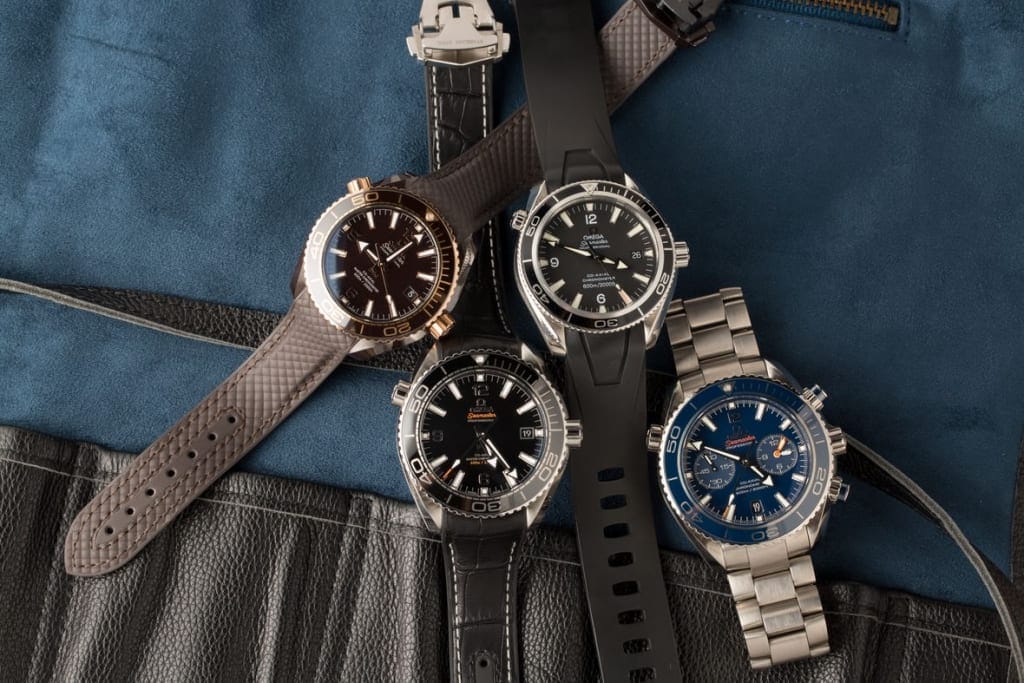
Key differences at a glance
| Consideration | Speedmaster | Seamaster |
|---|---|---|
| First distinction | Which chronograph and movement? | Diver 300M, Planet Ocean or Aqua Terra? |
| Useful comparison | Winding routine, pusher operation, crystal | Bezel, case thickness, intended water use |
| Avoid assuming | Every Speedmaster is a manual Moonwatch | Every Seamaster is the same type of diver |
Use this to select a pair of exact references. It is a decision framework, not a complete family specification sheet.
Timing an event or choosing a water-oriented watch?
Speedmaster versus Seamaster is not a comparison between two single watches. Begin with the task: a chronograph measures elapsed time with pushers and subdials, while a dive-style timing bezel provides a different way to track an interval. The exact reference determines the functions and water-resistance specification.
Within Speedmaster, distinguish the Moonwatch from other automatic and specialist variants. Within Seamaster, separate Diver 300M, Planet Ocean and Aqua Terra before comparing wearability. Not every Seamaster is a rotating-bezel dive watch, and not every Speedmaster uses the same winding routine.
How this applies to Omega
Ask for the complete reference, not just “Seamaster” or “Moonwatch”. Check bezel operation, chronograph reset alignment where fitted, bracelet fit and recorded service work. Sapphire and acrylic crystals, different movements and bracelet generations can materially alter the ownership experience even when photographs look similar.
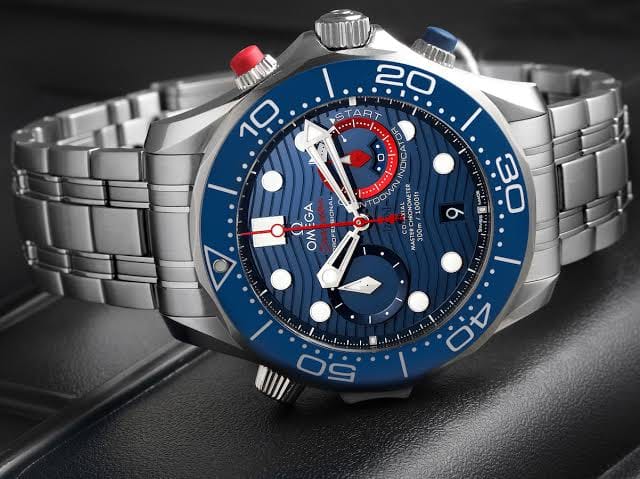
Two everyday scenarios
If you enjoy timing a journey or an activity and want the interaction of starting, stopping and reading a chronograph, begin with a Speedmaster reference whose display you can read easily. Then decide whether manual winding is part of the pleasure or an unwanted routine. The classic Moonwatch idea should not stop you comparing other Speedmasters if a different size or winding arrangement suits you better. Check which hand displays ordinary seconds and which one records the timed interval.
If your priority is a watch that moves easily between work, travel and time near water, start by separating the Seamaster families. A prominent rotating bezel and a thicker case create a different presence from an Aqua Terra’s less overtly diving-oriented design. Try a sleeve over the watch and consider how the bracelet adjusts when your wrist changes through the day. The right answer may be a quieter Seamaster rather than the most technically imposing diver—or a Speedmaster when water use is not your priority.
Put the information to work
Compare a specific pair on thickness, legibility, bracelet adjustment and servicing needs. If you swim, obtain confirmation of the reference’s intended use and present sealing condition. Do not operate chronograph pushers in water unless the exact manufacturer instructions explicitly permit it.
References and further reading
Manufacturer documentation and independent sources behind the details discussed above. Technical specifications apply to the named reference, not automatically to every watch in a collection.