Rolex / Watch journal
The Rolex Story
Oyster, Perpetual and the familiar professional families grew from different ideas. Their history explains the displays we recognise today.
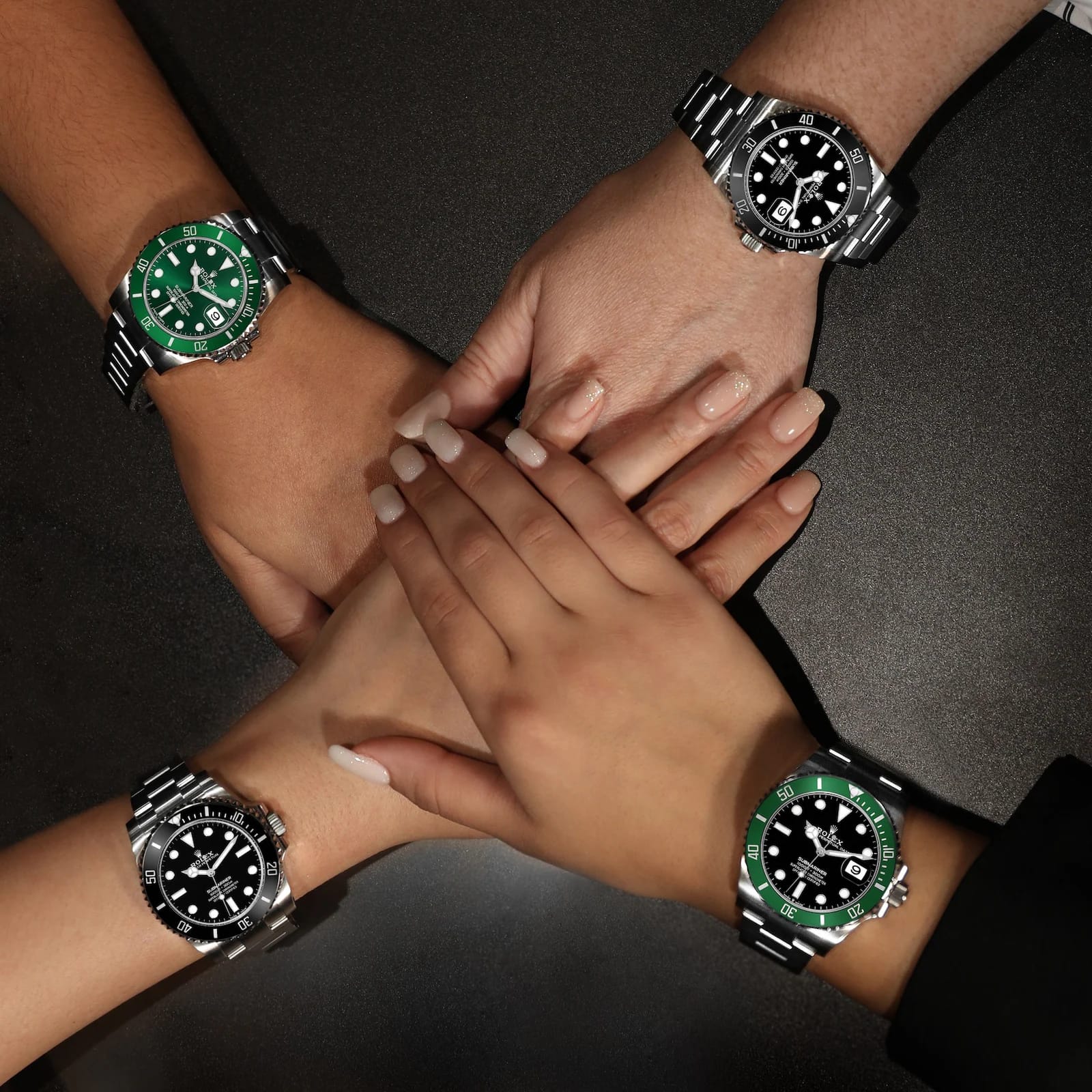
Milestones that explain the collection
Rolex’s familiar families began as different answers to everyday and professional needs: the Datejust arrived in 1945, the Submariner in 1953 and the GMT-Master in 1955. Their continued names should not obscure how much cases, bracelets and movements have changed between generations.
From a wristwatch idea to recognisable families
Rolex’s early story begins with Hans Wilsdorf’s watch-distribution business in London in 1905, before the move to Geneva in 1919. The Oyster case of 1926 and Perpetual winding mechanism of 1931 addressed different obstacles to regular wristwatch use: protecting the movement and replenishing its energy. This sequence helps explain why the same words appear together on later dials. They refer to strands of technical development, not simply an ornamental model name.
The later families added identifiable functions and visual cues to that foundation. The Datejust made the date part of a versatile everyday design; the Submariner and GMT-Master supplied very different bezel-based interfaces. This is a useful way to read the catalogue today: look at what the display was designed to tell its wearer. Then distinguish that historical purpose from the specifications and condition of the particular reference. A name can remain familiar while the proportions, materials and user experience change substantially.
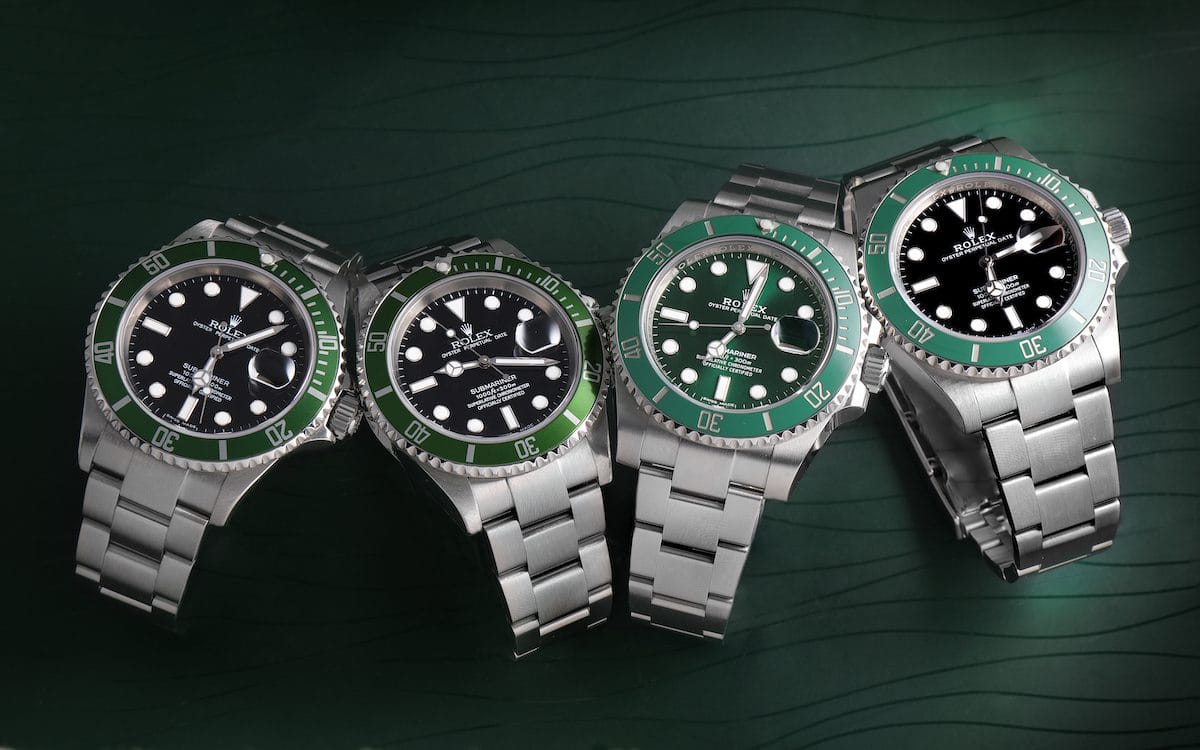
Read the history through the watch
A brand history is most useful when it helps explain the watch in front of you. Separate a collection’s first appearance from the production date of a particular reference. A familiar name can continue through major changes in construction, movement and proportions.
A modern heritage model may quote an older dial or case without reproducing its original mechanism or dimensions. That can be an advantage for everyday ownership. Conversely, a vintage watch may preserve period character while demanding more careful handling and specialist servicing. Neither is automatically the more authentic expression of your personal taste.
How this applies to Rolex
Start with the function you will actually use. Compare Datejust and Oyster Perpetual for everyday wear, Submariner for a diving-style timing bezel, GMT-Master II for travel and Daytona for elapsed-time measurement. A chronograph is not a second-time-zone display. A dress cuff, wrist size and preference for a date window often narrow the choice more effectively than popularity.
Put the information to work
Use the manufacturer’s chronology to establish context, then verify the actual reference, case and movement. Ask whether dial, hands and bracelet are period-correct, later manufacturer replacements or aftermarket parts. Provenance should describe the individual watch; an evocative story about the brand cannot substitute for it.
What to check on an individual watch
On a pre-owned Rolex, examine case symmetry, bezel condition, bracelet articulation and the clasp rather than judging only the dial photograph. Ask which dial, hands or bracelet parts were replaced. A later genuine service component can be suitable for daily wear while being less attractive to a buyer seeking period originality.
References and further reading
Manufacturer documentation and independent sources behind the details discussed above. Technical specifications apply to the named reference, not automatically to every watch in a collection.