Rolex / Watch journal
Rolex Watchmaking
Automatic winding, chronometer testing and water resistance do different jobs. Understand what the labels say—and what a used watch still needs checked.
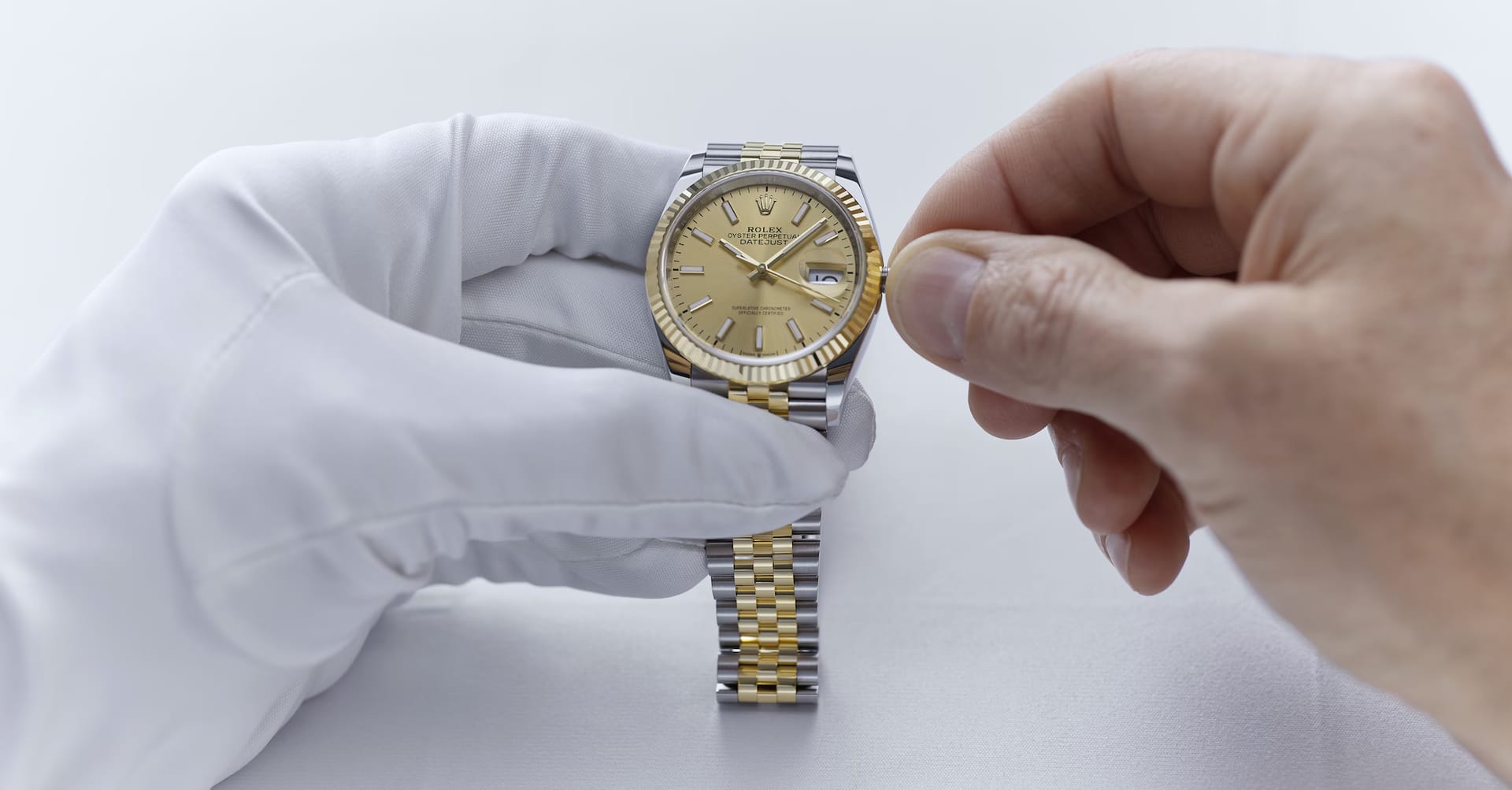
Chronometer testing and real-world timekeeping
Rolex’s modern Superlative Chronometer designation includes testing after casing, with the stated −2/+2 seconds per day precision criterion for the watches covered by that standard. It is not a promise that every vintage Rolex was tested to today’s specification, nor a substitute for measuring the condition of a used movement.
Distinguish the movement’s chronometer certification from the complete-watch checks and from a seller’s present-day timekeeping report. Test conditions, winding state, position and temperature can influence a reading. A single photograph of a timing machine is therefore useful context, not a full condition certificate.
Sources: Rolex
How this applies to Rolex
On a pre-owned Rolex, examine case symmetry, bezel condition, bracelet articulation and the clasp rather than judging only the dial photograph. Ask which dial, hands or bracelet parts were replaced. A later genuine service component can be suitable for daily wear while being less attractive to a buyer seeking period originality.
Follow the energy before comparing the labels
In a mechanical watch, winding stores energy in the mainspring. A train of wheels carries that energy to the hands, while the escapement and oscillator control its release. Automatic winding describes how energy is replenished; chronometer testing describes measured performance. Water resistance concerns the case and seals. These are related parts of a complete watch, but none is a substitute for the others. An automatically wound watch can still need winding after storage, and good timekeeping does not prove that a case is watertight.
For a pre-owned example, ask for observations under stated conditions rather than an unsupported “keeps perfect time”. A useful report identifies the watch, test date and what was measured. A short timegrapher snapshot, the owner’s wrist observation and a complete manufacturer test are different kinds of evidence. Discuss an unexplained change in behaviour with a qualified watchmaker before assuming that a familiar movement name makes further checks unnecessary.
Put the information to work
Identify the calibre and ask whether service work has changed components. For everyday ownership, reliable operation, correct setting and documented sealing matter alongside precision. Use the reference manual rather than assuming the same winding and setting procedure applies to every Rolex complication.
References and further reading
Manufacturer documentation and independent sources behind the details discussed above. Technical specifications apply to the named reference, not automatically to every watch in a collection.