Tudor / Watch journal
Tudor Black Bay Guide
Choose the Black Bay function first, then size, colour and bracelet. Similar-looking references can belong to different movement and case generations.
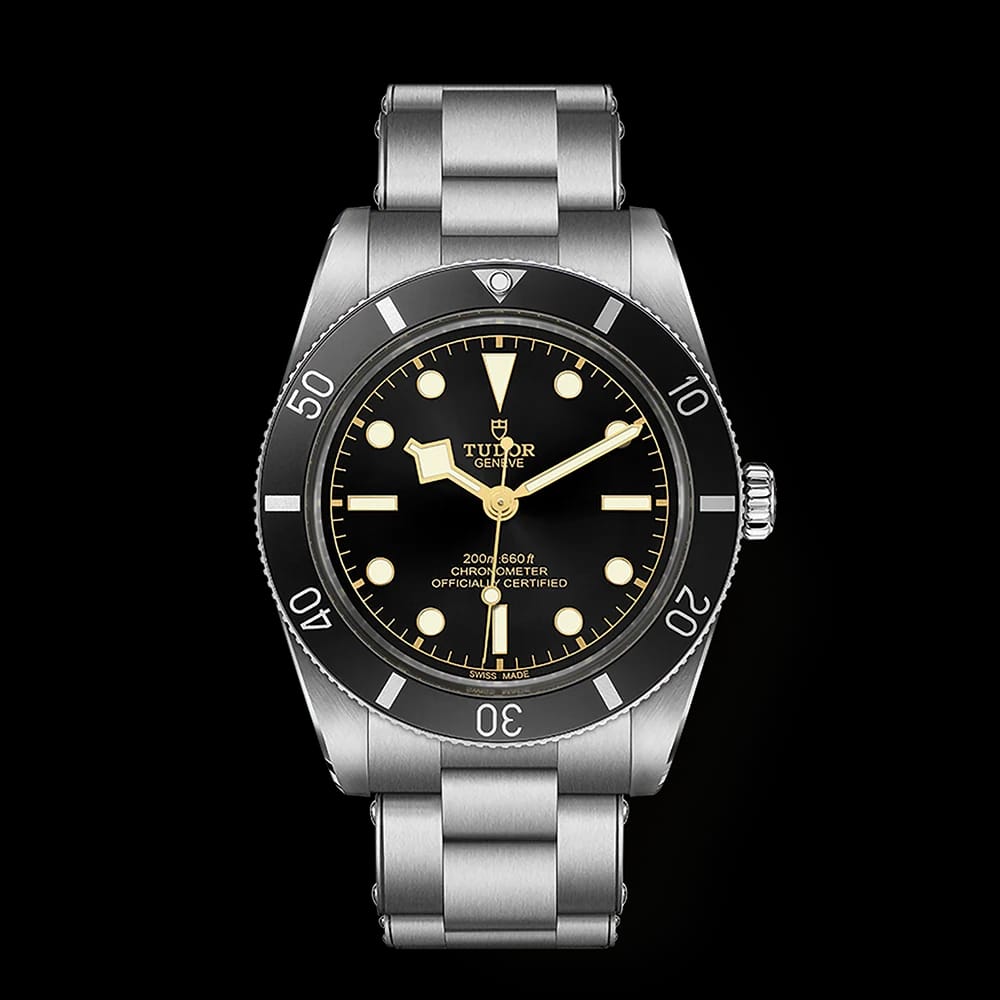
Black Bay is a family, not a single dive-watch specification
Start by identifying which Black Bay you are considering. The family spans different sizes, movements and complications, so a name or dial colour is not enough to compare two listings. A GMT and a chronograph add different functions to a simple time-and-bezel watch.
Compare case thickness and bracelet or strap choice as carefully as diameter. A smaller number on the specification sheet does not guarantee a flatter fit. Certification and water-resistance claims must come from the exact reference rather than from another Black Bay advertisement.
Sources: Tudor
How this applies to Tudor
Identify the reference and movement generation, then check bezel action, clasp adjustment and included straps. Fixed-bar FXD models need suitable pass-through straps rather than an assumption of standard bracelet compatibility. Certification, size and depth rating must all be confirmed for the actual watch.
Choose the display before the colour
Make the first split by function: a relatively simple time display, a second-time-zone watch or a chronograph. Only then compare colour, bezel treatment and strap. A Black Bay GMT and a Black Bay Chrono may both be attractive, but they ask different things of the wearer and do different jobs. If you want the least visual interruption when reading the time, begin with a simpler dial. If you actively use an additional function, check that its display is readable at ordinary wrist distance.
Next compare generations within the shortlisted version. Do not merge seller descriptions just because the watches look similar: movement, clasp and case proportions need to be established separately. Ask for the full reference and photographs of the actual bracelet adjustment. If a watch comes with several straps, check which are included and whether the fitting components are present. A preferred colour is a poor trade for a watch that cannot be sized comfortably or whose condition remains unclear.
Put the information to work
Check bezel action, crown operation, clasp adjustment and spare links. Ask whether the watch has been refinished and whether the most recent service included sealing tests. Select the design you enjoy, then choose a documented example rather than assuming every watch in the family has identical capabilities.
References and further reading
Manufacturer documentation and independent sources behind the details discussed above. Technical specifications apply to the named reference, not automatically to every watch in a collection.